Split the Rent, Stack the Culture: Inside the West Coast's Shared Studio Revolution
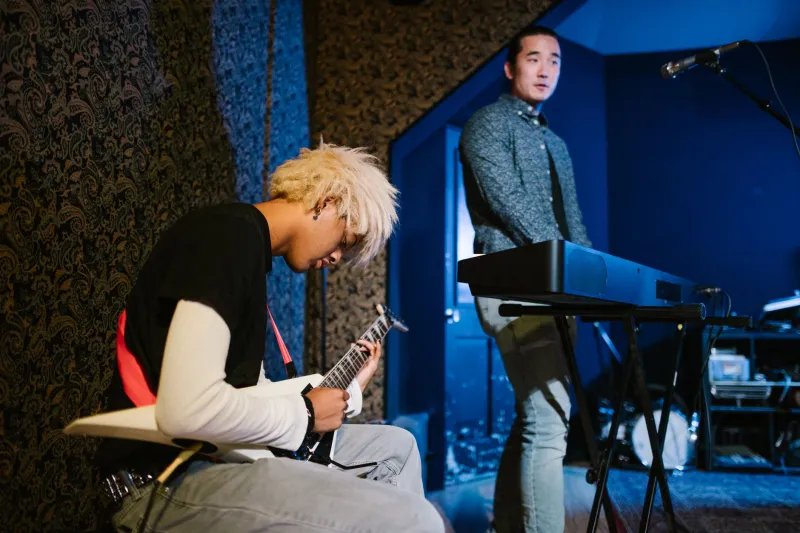
There's a particular kind of magic that happens when a bedroom R&B singer walks past an open door and catches a beat a hip-hop producer left looping while he went to grab lunch. Nobody scheduled that moment. Nobody pitched it in a meeting. It just happened — because they share a building, a bathroom, maybe a coffee maker that's seen better days.
That accidental collision is the engine powering a quiet but seismic shift happening in studios up and down the West Coast. From converted warehouses in East Oakland to repurposed commercial suites in Inglewood to low-key creative lofts tucked into Seattle's Central District, artists are pooling resources, splitting square footage, and discovering that proximity to other creative minds might be the most underrated production tool money can — and sometimes can't — buy.
The Economics of Togetherness
Let's be real: solo studio space on the West Coast is basically a luxury item at this point. Commercial studio time in LA runs anywhere from $50 to several hundred dollars an hour depending on the room, and locking down your own dedicated space means lease agreements that would make most independent artists faint. The math simply doesn't work for emerging talent trying to build something without a label bankrolling every session.
Shared studio complexes flip that equation. When eight artists split the cost of a multi-room creative suite, suddenly everyone gets a dedicated space, shared equipment access, and a built-in community — all for roughly what one person would pay for a closet-sized practice room elsewhere. It's not glamorous, but it's functional in a way that actually moves careers forward.
Moreover, the financial arrangement creates a kind of organic accountability. When you're splitting rent with people who are just as hungry as you are, slacking off feels different. The culture inside these spaces tends to be self-regulating in the best possible way — everyone's grinding, so everyone keeps grinding.
Walls That Don't Stay Up
What nobody quite anticipates when they first move into a shared space is how permeable the boundaries become. You come in with your project, your genre, your lane. And then, slowly, those walls start dissolving.
Take the kind of scene playing out in spots like the Crenshaw Corridor or along Fruitvale Avenue in Oakland — collectives where producers working in Afrobeats, West Coast rap, and experimental electronic music share not just walls but workflows. A percussionist from one camp ends up laying something down for a producer three doors down. A vocalist stops in to get feedback on a hook and ends up co-writing something entirely new. The cross-pollination isn't forced or branded — it's just what happens when creative people occupy the same space long enough.
This is the part that labels and industry consultants can't manufacture. You can't schedule serendipity. But you can build environments where it's likely to occur, and that's exactly what these shared studio ecosystems are doing.
Profiles in Proximity
Consider the story of a young producer — call him Marco, based out of a collective in Inglewood — who came into his shared space primarily making sample-heavy boom-bap. Within six months of being around artists working in neo-soul and dancehall, his sound had evolved into something genuinely harder to categorize. That's not a compromise; that's growth. His placement rate shot up because his palette expanded, and it expanded because of who was two doors down.
Or think about the singer-songwriters in Seattle's South End who've built a loose collective of vocalists, multi-instrumentalists, and visual artists under one roof. The music coming out of that space carries a texture you can't fake — it's been pressure-tested in real time by people with different ears and different reference points. When one artist's track gets workshopped in the communal area, it doesn't just get better. It gets more honest.
These aren't anomalies. They're patterns repeating themselves across the West Coast wherever the shared studio model takes root.
Who Gets Access Changes Everything
One of the most significant — and least discussed — impacts of the shared studio movement is how it's reshaping access. Traditional studio culture has always had gatekeepers: you need credits, connections, or cash to get in the door. Shared spaces operate differently. When artists are curating their own collectives, they tend to recruit based on vibe, work ethic, and complementary skill sets rather than résumé.
That shift matters enormously for artists who've historically been locked out of professional production environments — women producers, queer artists, first-generation musicians whose families didn't have industry connections to pass down. Shared studio collectives on the West Coast are quietly becoming some of the most genuinely diverse creative environments in the music ecosystem, not because anyone mandated it, but because the community-driven model naturally pulls in a wider range of people.
When the barrier to entry is showing up and contributing rather than paying $300 an hour, the room looks different. And when the room looks different, the music sounds different.
The Informal Infrastructure
What makes these spaces function isn't just the square footage — it's the informal culture that develops inside them. House rules that aren't written down anywhere. Norms around sharing equipment, respecting session time, and keeping the communal areas functional. A shared Spotify playlist that becomes a de facto mood board for the whole building. Late-night feedback sessions that nobody called but everybody shows up for.
This informal infrastructure is genuinely hard to replicate. It's the kind of thing that takes months to develop and feels immediately fragile if the wrong energy enters the space. The collectives that thrive long-term are usually the ones that are intentional about who they bring in — not exclusive in a cliquish way, but protective of the culture they've built together.
Some collectives have started formalizing things slightly: shared equipment agreements, rotating studio manager roles, even informal residency programs for artists who want to plug in for a month or two without committing to a lease. It's community organizing dressed up as music production, and it works.
What Comes Next
The shared studio model isn't going to replace every form of music production on the West Coast. Big-budget sessions will still happen in big-budget rooms. Artists with major label infrastructure will still have access to resources most collectives can only dream about.
But the creative output coming out of these shared spaces is starting to turn heads in ways that matter. Songs with an organic, lived-in quality that stands apart from the polished-but-sterile sound of music assembled by committee in corporate studios. Projects that feel like they came from a real place because they literally did.
The West Coast has always been a place where community and creativity feed each other — from the block parties that birthed West Coast rap to the DIY punk scenes that defined certain pockets of the region for decades. The shared studio movement is the latest chapter in that long tradition of people deciding that the culture they want to be part of is worth building themselves, one split lease at a time.
And if you happen to catch a beat through an open door on your way to the kitchen? Don't let it go to waste.