Made by Hand: West Coast Producers Draw the Line on AI Beats

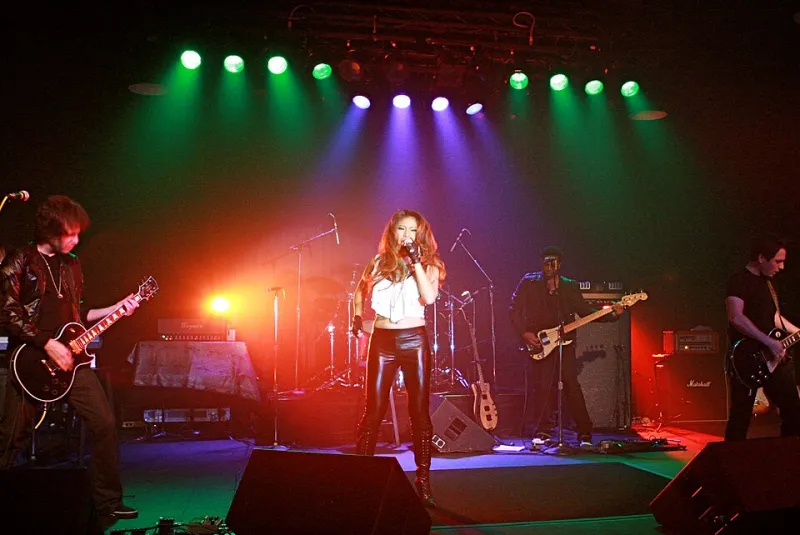
Photo: Michaelgottfried, CC BY-SA 4.0, via Wikimedia Commons
There's a moment in every great beat — a snare that hits just a little late, a sample flip that shouldn't work but absolutely does, a bass line that feels like it came out of somebody's chest rather than a hard drive. That moment, producers will tell you, is the whole point. It's the human fingerprint. And right now, that fingerprint is under serious pressure.
AI-generated music tools have gone from novelty to nuisance to genuine industry disruption in what feels like about eighteen months. Platforms like Udio and Suno can generate production-ready tracks in seconds, and beat marketplaces are already flooded with AI output priced so low that independent producers can't realistically compete on cost alone. For the West Coast's tight-knit community of beatmakers — people who built careers one crate dig, one late-night session, one hard-earned placement at a time — this isn't just a market problem. It's a cultural one.
The Flood Nobody Asked For
Ask any producer working out of LA, Oakland, or Seattle right now, and they'll tell you the same thing: the beat marketplace doesn't look like it used to. Platforms that once served as reliable income streams for independent producers are increasingly cluttered with AI-generated content, often mislabeled or sold without clear disclosure. For buyers who don't know the difference, price wins. For sellers trying to compete honestly, that's a losing game.
"It's not even that the AI stuff sounds amazing," says one Inglewood-based producer who asked to remain anonymous. "Half of it sounds like somebody described a song to a robot. But it's cheap, it's fast, and a lot of artists just need something to rap over for a SoundCloud drop. So they grab it."
The volume is the real issue. When AI tools can generate thousands of beats a day, the signal-to-noise ratio on every major beat platform collapses. Human producers, who might spend days or weeks perfecting a single instrumental, find themselves buried beneath an avalanche of generated content optimized for search terms rather than soul.
Authentication as Resistance
Some producers aren't waiting for platforms or legislators to solve the problem — they're building their own solutions. A loose coalition of beatmakers across the Bay Area and LA has been developing what they're calling "provenance tagging," a system that embeds verifiable metadata directly into audio files to establish human origin, timestamp creation, and document the production chain from initial sample to final mix.
The concept borrows from the art world's certificate of authenticity model and applies it to music production. The idea is that a tagged beat carries proof of its human origin — something an AI-generated file structurally cannot replicate in the same way.
"We're not anti-technology," explains one Oakland producer involved in the initiative. "We use technology every single day. DAWs, plugins, drum machines — all of it. What we're against is misrepresentation. If you're selling AI content, say so. If you're not, prove it. That's fair."
The provenance effort is still in early stages, and the producers involved acknowledge that no metadata system is foolproof. But the act of building it — of the community coming together around the problem — carries its own significance.
The Cultural Argument
Beyond the technical and economic dimensions, there's a cultural case being made loudly across West Coast music circles: that the specific character of West Coast sound is inseparable from the people and places that created it. G-funk's DNA is in the Inland Empire. The Bay's hyphy movement grew out of specific neighborhoods, specific politics, specific lived experiences. Seattle's experimental hip-hop scene reflects that city's particular relationship with isolation and innovation. None of that can be replicated by a language model trained on aggregate data.
"AI can approximate the sound," says a Leimert Park-based beatmaker who runs workshops for emerging producers out of a community arts space. "It cannot approximate the feeling. And the feeling is what people in this city have always made music about."
That argument is finding real traction in community spaces. Several LA-based collectives have launched "human-made" certification programs for their showcases and beat battles — events where participants are required to demonstrate their production process live or submit session files as proof of origin. It's a small-scale solution, but it's building a culture of accountability from the ground up.
What Artists Are Doing About It
It's not just producers pushing back. A growing number of West Coast artists are publicly committing to working exclusively with human beatmakers — and saying so explicitly in their rollouts and interviews. The move is partly ethical, partly brand positioning, and partly a genuine belief that the collaboration between artist and producer is irreplaceable.
"When I'm in the room with my producer, something happens that can't happen any other way," says one emerging Compton rapper who's been vocal about the issue on social media. "He hears something in what I'm saying and flips it into the beat. That's a conversation. You can't have that conversation with software."
This kind of artist-producer solidarity is becoming a visible thread in West Coast music culture — a counter-narrative to the efficiency-first logic that AI tools are designed to sell.
The Industry Hasn't Caught Up
For all the grassroots energy, the institutional response remains sluggish. Streaming platforms have been slow to implement meaningful AI disclosure requirements. Beat marketplaces, which profit from volume regardless of origin, have little financial incentive to police their catalogs aggressively. And while federal lawmakers have floated various AI and copyright proposals, nothing with real teeth has landed yet.
Producers following the legislative landscape aren't holding their breath. "By the time Washington figures out what a DAW is, we'll have already built the solution ourselves," says one producer dryly. It's a very West Coast attitude — skeptical of top-down fixes, confident in community-driven ones.
Keeping It Poppin', Keeping It Real
What's emerging from all of this isn't panic — it's clarity. West Coast producers have always operated in an environment that demanded they hustle harder, innovate faster, and build community tighter than anyone else. The AI moment is, in some ways, just the latest test of that resilience.
The beatmakers drawing the line aren't Luddites. They're artists who understand that the value of their work lives in its humanity, and they're not about to let that get commodified out of existence without a fight. The provenance tags, the human-made certifications, the artist solidarity pledges — none of it is a complete answer. But together, they're the beginning of one.
And on the West Coast, beginnings have a way of becoming movements.