After Dark and On the Clock: Inside the West Coast's All-Night Music Hustle
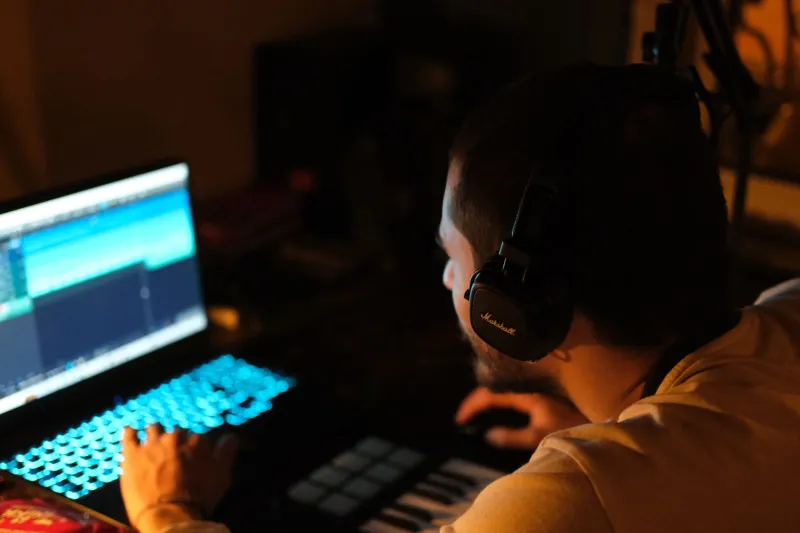
Somewhere in East Los Angeles right now, a producer named Dre Solano is four hours into a session that started when most people were brushing their teeth before bed. His monitors are cranked just low enough not to wake the neighbors. His laptop screen glows. His coffee is cold. And he hasn't felt this locked in all day.
"The daytime is everybody else's," Solano says, not looking up from his keyboard. "After midnight, it's mine."
Solano isn't an outlier. He's part of a quietly expanding ecosystem that's been taking root up and down the West Coast — a parallel music industry that runs on its own clock, answers to its own rules, and increasingly, produces its own results. Call it the nocturnal economy. Call it the graveyard shift hustle. Whatever you call it, it's real, it's growing, and it's changing what it means to build a career in West Coast music.
Why the Night Hits Different
Ask any working producer why they gravitate toward late hours and you'll get the same answer dressed up in a hundred different ways: the noise stops. Not just the physical noise — though that matters — but the mental clutter. The emails, the DMs, the label calls, the social media obligations, the constant performance of being a working artist in the attention economy. All of it quiets down somewhere around 1 AM, and what's left is just the work.
For artists operating in cities like LA, San Francisco, and Seattle — places that never fully sleep but do shift gears dramatically after midnight — those quiet hours represent something increasingly rare: uninterrupted creative space. Studio time is cheaper. Collaboration requests slow down. The algorithm isn't demanding content. And the pressure to perform publicly drops to near zero.
San Diego-based singer-songwriter Marisol Vega puts it plainly: "I've written more during 2-to-5 AM than at any other time in my life. There's something about being the only one awake that makes you honest with yourself."
The Businesses Built for the Night Shift
Where artists go, infrastructure follows. Across the West Coast, a new generation of music-adjacent businesses has quietly oriented itself toward the nocturnal creative class.
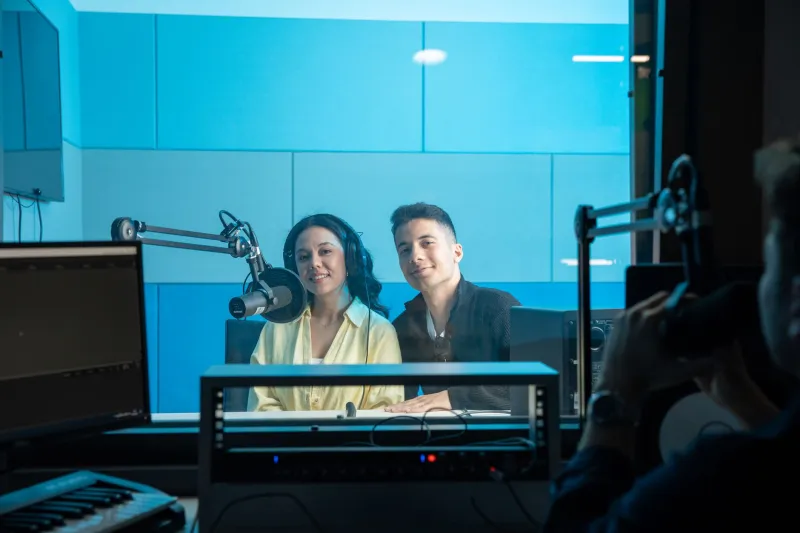
In Oakland, a recording facility called Third Shift Studio offers booking windows that start at 11 PM and run through 7 AM at rates roughly 40 percent below their daytime slots. Owner Marcus Webb launched the model two years ago after noticing that his late-night sessions were consistently producing the most interesting work. "Artists come in at midnight and they're relaxed," he says. "They're not performing for anyone. They're just making music."
The concept has caught on fast. Third Shift is now booked solid four nights a week, with a waitlist that stretches into next month. Webb is already scouting space for a second location.
In Los Angeles, the trend has spawned a micro-scene of 2 AM listening parties — intimate, invite-only gatherings where artists debut unreleased material to rooms of thirty or forty people who are tired enough to drop their critical defenses and just feel the music. These aren't industry showcases with label reps checking their phones. They're closer to underground church services, held in living rooms, warehouses, and the occasional rooftop, where the music gets to exist before the discourse catches up to it.
"You play something at 2 AM to a room full of people who chose to still be awake," says event organizer Tanya Rho, who runs a listening series called Deep Hours out of Silver Lake. "Those people are committed. They're not there to be seen. They're there to hear."
Insomnia as Infrastructure
There's a harder conversation underneath all of this, and it's worth having directly. The nocturnal music economy didn't emerge from nowhere — it grew partly out of necessity. For independent artists who work day jobs to pay rent, the night is the only time left. For producers who share apartments and can't record during business hours, midnight is the only window. For creatives priced out of traditional studio time, the discount hours aren't a lifestyle choice — they're a budget reality.
The romanticization of sleep deprivation in hustle culture is real, and it deserves some scrutiny. Burning the candle at both ends is not a sustainable creative strategy, and the music industry has a long history of glorifying exhaustion in ways that have cost artists their health, their relationships, and sometimes their lives.
But here's the nuance that gets lost in that critique: not everyone working after midnight is grinding themselves into the ground. A growing number of West Coast creatives have deliberately restructured their entire schedules around nocturnal productivity — sleeping through the morning, living their lives in the afternoon, and treating the late-night hours as their primary work window rather than an overflow valve. It's less about hustle mythology and more about finding the rhythm that actually fits.
Seattle-based producer and DJ Kira Malone made the switch two years ago and hasn't looked back. "I sleep from 6 AM to noon. I live my life noon to 10 PM. I work 10 PM to 6 AM. My output has literally tripled," she says. "People think it's extreme until they try it."
Sunrise Sets and the New Morning Ritual
The nocturnal economy doesn't always end in darkness. On the far edge of the night shift, a new ritual has emerged on the West Coast: the sunrise DJ set. Part performance, part meditation, part community event, these sets — which typically run from around 5 to 8 AM in parks, on beaches, or in open warehouse spaces — have developed a devoted following among people who've been up all night and people who've risen early to meet them.
In Los Angeles, promoter collective Dawn Patrol has been running monthly sunrise sets in Elysian Park since 2022. The crowd is a mix of all-nighters, early risers, dog walkers who wander in curious, and regulars who treat it like a weekly ritual. There's no alcohol service. No VIP section. No bottle service math. Just music as the sun comes up.
"It's the most democratic music event I've ever been part of," says DJ and Dawn Patrol co-founder Luis Pacheco. "Nobody's trying to impress anyone at 6 AM. They're just trying to feel something."
What This Economy Is Really Building
Step back and look at the full picture — the late-night studios, the 2 AM listening parties, the restructured sleep schedules, the sunrise sets — and what you're really seeing is a community constructing its own parallel infrastructure. One that exists outside traditional industry hours, outside traditional industry gatekeepers, and largely outside traditional industry economics.
The West Coast has always had a gift for building alternative systems. From the DIY venue scene to the independent label movement to the bedroom producer boom, the region's creative culture has repeatedly demonstrated that when the front door is locked, you build your own entrance.
The nocturnal economy is the latest version of that instinct. It's not about being too cool for daylight. It's about finding the space — literal and figurative — to do the work without interference. And right now, that space exists between midnight and sunrise.
Solano finally looks up from his keyboard somewhere around 3 AM. He plays back what he's built in the last four hours. It's good. Really good. He saves the session, stretches, and starts another cup of coffee.
The city is asleep. He's just getting started.