Spin Doctors: How West Coast Radio DJs Stopped Gatekeeping and Started Building Careers
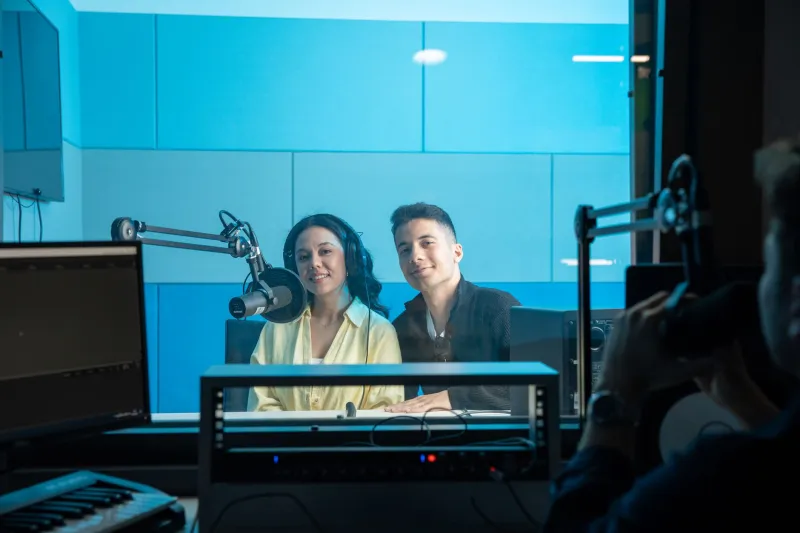
There's a room at KXLU, Loyola Marymount's legendary college radio station in Los Angeles, where the carpet is permanently stained with coffee and the walls are covered in show flyers going back three decades. It doesn't look like an artist development lab. But ask any number of working musicians who came through the LA underground in the last ten years, and they'll tell you that room — and the DJs who ran it — changed everything for them.
Radio has always had power. What's changing is how that power gets used.
From Velvet Rope to Open Door
The traditional model was simple, if brutal: radio programmers decided what went on air, labels paid to get their artists in rotation, and independent artists without the right connections got locked out entirely. The DJ was a gatekeeper, full stop.
But something shifted. Streaming flattened the discovery landscape, social media gave artists direct lines to fans, and suddenly the old gatekeeping model looked less like power and more like irrelevance. The DJs who adapted didn't just survive — they found a new role that turned out to be more meaningful than the old one.
"I realized pretty early that if all I was doing was playing what the labels sent me, I was going to become obsolete," says Marcus Delray, a programmer at a Long Beach independent station who asked us to use his DJ name. "The artists who were actually exciting weren't coming through those channels. They were in my DMs, they were playing warehouse shows, they were making noise online. So I just... started paying attention to that instead."
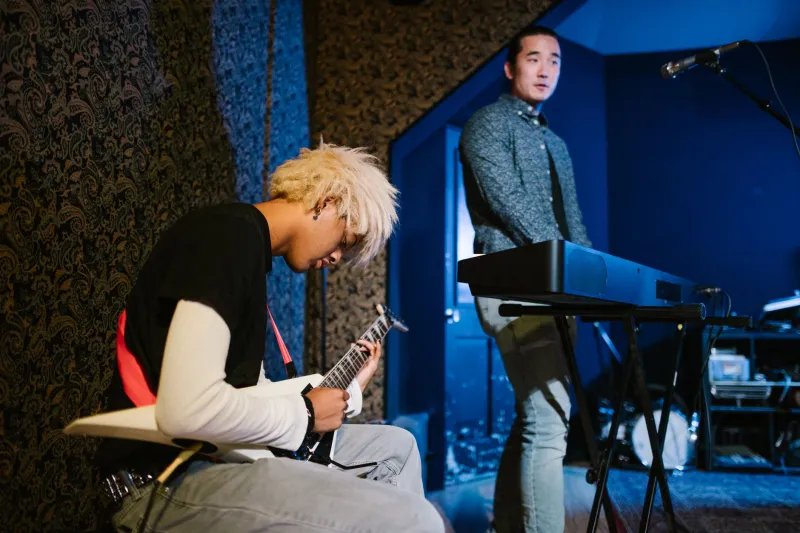
Delray now hosts informal listening sessions at the station twice a month, inviting emerging local artists to workshop new material in front of a small audience of other musicians, producers, and regular listeners. It's not a showcase. It's closer to a rehearsal — a space where artists can hear how their music lands in real time before committing to a release.
The Studio Sessions Nobody's Talking About
Over at UC Santa Barbara's KCSB, programmer and DJ Yolanda Reyes has taken the collaboration angle even further. Reyes, who's been on air for six years, started facilitating what she calls "radio sessions" — stripped-down recording afternoons where she brings in an emerging artist, records an exclusive live performance, and then spends the back half of the session just talking craft.
"It started because I wanted better content for the station," she says with a laugh. "But then I realized these artists were coming in with demos that were almost there, and I had opinions. I've been listening to music critically for years. I know what makes something hit on air versus what gets skipped. And I started sharing that."
The feedback Reyes offers isn't label A&R polish — it's something more specific. She's thinking about how a song feels at 2 p.m. on a Tuesday when a listener is stuck in traffic on the 101. She's thinking about the moment a chorus either earns its hook or doesn't. Several artists who've gone through her sessions credit her with pushing them to rework tracks that later became their strongest material.
One of those artists, a Ventura-based singer-songwriter who goes by Solene, says Reyes told her bluntly that her single's intro was losing people before the song even started. "She wasn't mean about it, but she was direct. She said, 'You have about eight seconds on radio. What are you doing with them?' I went back and re-edited the whole track. It's now my most-played song."
Why This Works Better Than Traditional A&R
Label A&R has always been a strange beast — part talent scout, part taste-maker, part corporate filter. The problem is that the corporate part tends to dominate. An A&R rep is ultimately accountable to a business, which means their feedback is shaped by what they think will sell broadly, not what's authentic to the artist.
Independent radio DJs don't have that conflict. Their currency is credibility with their audience, and their audience is almost always local, specific, and deeply invested in real culture. That creates a different kind of feedback loop.
"I don't need an artist to go platinum," says DJ Theo Macks, who runs a late-night show on a San Francisco independent station and has been programming for nearly a decade. "I need them to be real. I need my listeners to feel like I'm showing them something genuine. So when I work with an artist, I'm asking different questions than a label would. I'm asking: who are you, actually? What does this music mean to you? Because if you can't answer that, it's going to come through in the music."
Macks has been involved informally in the development of at least a dozen Bay Area artists over the years, several of whom have gone on to sign deals, tour nationally, or build substantial independent followings. He's quick to say he doesn't take credit — "they did the work" — but the artists themselves are less modest about acknowledging the role his mentorship played.
Building the Pipeline From the Ground Up
What's emerging on the West Coast isn't a formal system. There's no institution coordinating it, no grant funding it, no press release announcing it. It's a collection of individual DJs who decided their platform meant more than just airtime, and who started using it accordingly.
That organic quality is part of what makes it work. Artists aren't being processed through a program. They're building real relationships with people who are genuinely passionate about music and deeply embedded in their local scenes. The feedback they get is honest because it comes without an agenda.
College stations in particular have become fertile ground for this kind of development. With lower stakes than commercial radio and a built-in community of music-obsessed students, they're natural incubators. KXLU, KCSB, UCLA's KLA, and San Diego's KSDT have all seen their programmers take on roles that look more like mentors than broadcasters in recent years.
"We joke that we're the farm team," says one KXLU programmer who's been with the station since her sophomore year and is now a senior. "But it's not really a joke. We hear these artists before anyone else does. And if we care about them, we help them get ready."
What Radio Actually Is Now
Maybe the bigger story here isn't just about artist development. It's about what radio has become — and what it always had the potential to be.
The broadcast model isn't dead. But its value has shifted. In an era when anyone can upload a track to Spotify and technically reach a global audience, what radio offers is something different: context, community, and curation with a human face behind it. A DJ who knows your city, knows your sound, and knows your story is worth more than an algorithm that knows your streaming numbers.
The West Coast has always had a talent for reinventing cultural institutions rather than abandoning them. From the way LA reimagined the record store to how the Bay Area transformed the music festival, there's a regional instinct here for finding the new use inside the old form.
Radio DJs becoming artist development mavens? That's just the West Coast doing what it does — taking something that looked like it was fading out and making it pop again.