No Studio, No Problem: How West Coast Bedroom Producers Are Earning A-List Respect
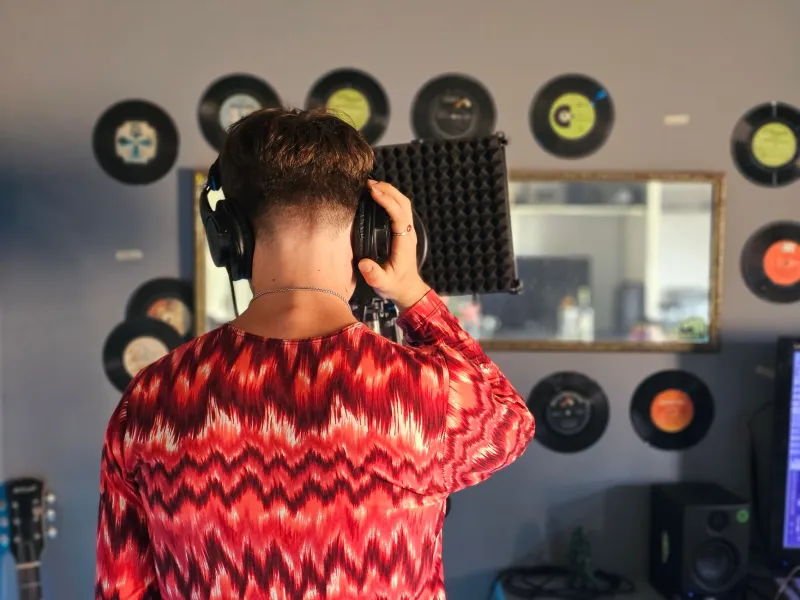
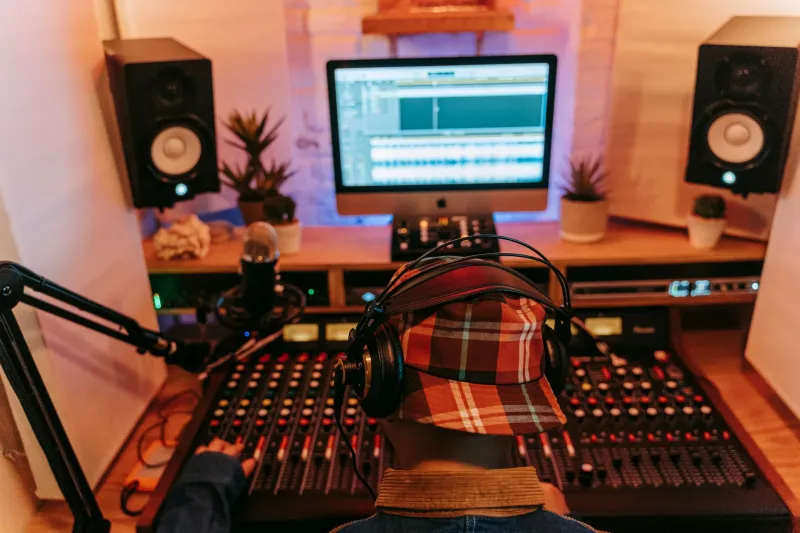
There's a studio in Inglewood that costs nothing to rent. No front desk. No assistant engineer hovering with a clipboard. No parking validation. It's a 10-by-12 room with acoustic foam panels taped to the drywall, a secondhand desk, and a pair of monitors that took three months of gig money to afford. And out of that room, 24-year-old producer Dani Reyes has placed beats on two independent projects that charted on Spotify's US Hip-Hop playlist, landed a sync deal with a streaming platform, and booked her first West Coast run of live dates — all before she's ever stepped inside a commercial recording facility.
"People kept telling me I needed to get into a 'real' studio," Reyes says, laughing. "But every time I heard something I made come out of someone else's speakers, it sounded exactly like what I wanted. So I just kept going."
Reyes isn't an anomaly. She's the rule now.
The Gear Gap Closed Faster Than Anyone Expected
Ten years ago, the gap between a bedroom setup and a professional studio was a canyon. Today, it's a curb. The democratization of music production technology has been one of the most quietly radical shifts in the entertainment industry, and nowhere has it landed harder than on the West Coast, where a culture of hustle, innovation, and DIY independence was already baked into the DNA.
For under $2,000 — sometimes significantly less — an artist can assemble a rig that would have cost $50,000 in the early 2000s. A solid audio interface like the Focusrite Scarlett series, a decent large-diaphragm condenser microphone, studio headphones, and a laptop running Ableton Live, Logic Pro, or FL Studio is genuinely all it takes to record music that competes commercially. Add a few well-placed acoustic panels and some basic soundproofing, and the technical excuses start evaporating.
Los Angeles-based producer and multi-instrumentalist Marcus Tran built his setup incrementally over two years, prioritizing his monitoring chain above everything else. "Your monitors are your truth," he explains. "If you can hear what's actually happening in your mix, you can fix it. I'd rather have a $700 pair of monitors in a treated room than $3,000 monitors in a bad-sounding space."
Tran now produces for artists across the LA and Bay Area scenes and recently co-wrote a track that appeared on a major label project — credited, paid, and everything.
Plugins, Samples, and the Sound of Professional
Beyond hardware, the software ecosystem has matured to a point where bedroom producers have access to tools that are genuinely indistinguishable from their commercial counterparts. Subscription services like Splice put industry-grade samples in anyone's hands for less than the cost of a streaming subscription. Plugin developers like Native Instruments, iZotope, and Arturia have brought mixing, mastering, and synthesis tools to home setups that once required rooms full of outboard gear.
Oakland-based artist and producer Selene Park credits iZotope's Ozone suite with transforming how she approaches finishing records. "I used to send everything out for mastering and spend money I didn't have," she says. "Now I can get a master that translates on every platform, every speaker, right here. It's not magic — you still have to learn what you're doing — but the ceiling is way higher than people think."
Park's self-produced debut EP earned her a feature in a regional music blog that caught the attention of a Bay Area booking agent. She's since played three sold-out shows at venues in San Francisco and Oakland and is currently in talks for a Pacific Northwest run.
The Collaboration Economy
One of the less-discussed advantages of the home studio era is how it has reshaped collaboration. When geography stops being a barrier — when you can send stems, stems, and session files across the country or across town in minutes — the network effect compounds fast.
West Coast artists have been particularly aggressive about leveraging this. Discord servers, producer forums, and Instagram DMs have replaced the hallway conversations that used to happen outside commercial studio lounges. The relationships are different, but they're real.
"I've never been in the same room as three of the artists I've worked with most," says San Diego producer JT Madera. "We built trust through the work. You send something dope, they send something back, and eventually you're both on a project that people care about."
Madera's remote collaboration with a Portland-based vocalist produced a single that racked up over 400,000 streams and led to both artists being booked on the same Pacific Coast festival bill this past summer — the first time they'd ever met in person.
Credibility Isn't Built in a Room Anymore
The old gatekeeping logic held that studio time was a proxy for seriousness. If you could afford to be in a real room, you were a real artist. That logic has been thoroughly dismantled, and the industry — labels, booking agents, sync supervisors — has been forced to reckon with it.
"I've stopped asking where something was recorded," admits a Los Angeles-based A&R who asked to remain anonymous. "I care about how it sounds, whether it moves me, and whether the artist has an audience. A bedroom track that's doing numbers tells me everything I need to know."
What that means practically is that West Coast bedroom producers are increasingly arriving at industry conversations with leverage they weren't supposed to have. They have catalogs. They have streaming data. They have live track records. They built all of it without asking permission.
Dani Reyes puts it simply: "I didn't wait for someone to give me a shot. I just made the shot exist."
What Still Takes Work
None of this is a shortcut. The artists thriving in the home studio economy are the ones who've treated their bedrooms like classrooms — obsessively studying mixing technique, ear-training, arrangement, and the business side of music simultaneously. The gear lowers the barrier, but the craft still demands time.
Acoustic treatment remains the most underestimated variable. A great microphone in an untreated room with parallel walls and hard floors will produce a recording that sounds exactly like what it is. Foam panels, bass traps, and even strategic furniture placement make a measurable difference that no plugin can fully compensate for.
But the artists who are winning? They've figured that out. They've watched the YouTube tutorials, joined the forums, and put in the hours. And now they're booking the gigs.
The West Coast bedroom studio isn't a stepping stone to something more legitimate. For a growing number of artists, it is the legitimate thing. The industry just took a minute to catch up.