Unauthorized and Unstoppable: Inside the West Coast Bootleg Remix Underground
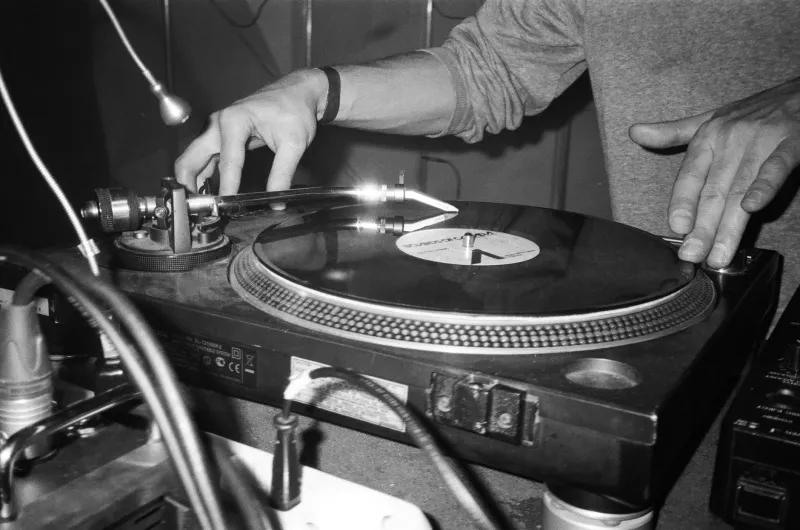
There's a producer in East Oakland who has never released an official single. He doesn't have a distributor, a label deal, or a publicist. What he does have is 40,000 followers who treat every anonymous SoundCloud upload like a religious event. His catalog? Almost entirely bootleg edits — unauthorized reimaginings of everyone from Kendrick Lamar to Sade to obscure '90s house records most people forgot existed.
He asked us not to use his name. But he didn't hesitate to talk about the culture.
"The bootleg is the most honest thing in music right now," he told us over the phone, his voice calm and deliberate. "You're not doing it for a check. You're doing it because you heard something nobody else heard yet."
This is the West Coast bootleg underground — and it is absolutely thriving.
The Gray Market That Won't Quit
Bootleg remixes have existed since the days of reel-to-reel tape decks, but the digital era gave the format a second life that nobody in the industry quite anticipated. Platforms like SoundCloud, Bandcamp, and increasingly private Discord servers have created a distribution ecosystem that operates entirely outside official channels. No clearances. No royalty splits. No label approval. Just the track, the edit, and the community that forms around it.
On the West Coast — where the music culture has always been a little more experimental, a little more willing to operate in the margins — this gray market has evolved into something genuinely remarkable. Producers in LA's Leimert Park, the Bay's Temescal neighborhood, and San Diego's Barrio Logan are building loyal audiences by reinterpreting existing music with enough originality to feel like a statement.
The legal gray area is real and everyone involved knows it. Most bootlegs carry the telltale "FREE DOWNLOAD" tag, a kind of informal signal to rights holders that nobody's getting paid — a gesture that, while not legally protective, has historically reduced the chances of a takedown. It's an unwritten rule in a world that runs on unwritten rules.
Discovery Machine
Here's what the industry hasn't fully reckoned with: bootleg remixes have become one of the most effective artist discovery tools on the West Coast music scene.
When a producer flips a classic Janet Jackson sample over a trap-influenced drum pattern, two audiences find each other simultaneously. Janet fans who would never have clicked on an underground producer suddenly share the edit. The producer's existing followers get exposed to catalog they might have slept on. The result is a cross-pollination that no algorithm has managed to replicate with the same organic energy.
"I found half my favorite current producers through bootlegs," says Daniela R., a music blogger based in Long Beach who runs a newsletter dedicated to underground West Coast sounds. "Someone will flip a song I love and suddenly I'm deep in their catalog, buying their merch, showing up to their sets. It works."
Several producers who now hold legitimate label deals or sync licensing contracts trace their initial audience directly to bootleg circulation. The remix was the audition nobody officially asked for.
Building the Cult
What makes the bootleg economy particularly potent isn't just discovery — it's loyalty. Fans who find an artist through an unauthorized edit feel like they're in on something. There's a sense of shared exclusivity, especially when the track in question gets taken down and lives only in the hard drives of those who downloaded it in time.
This scarcity dynamic, whether intentional or accidental, creates exactly the kind of devotion that major label marketing budgets routinely fail to manufacture. Limited availability turns casual listeners into evangelists. People repost, re-upload, and share download links through DMs like they're passing contraband — which, technically, they sometimes are.
A DJ collective operating out of the Crenshaw district in South LA has built an entire event series around this energy. Their monthly parties are essentially listening sessions anchored by bootleg edits — tracks that don't exist on any streaming platform, experienced only in that room on that night. The waitlist for their events runs weeks long.
"We're not selling nostalgia," one of the collective's members explained. "We're selling the feeling that what's happening right now, in this room, belongs to us."
When the Industry Notices
The relationship between the bootleg underground and the official music industry is complicated and increasingly transactional. Labels and rights holders have historically responded to unauthorized remixes with takedowns, but a quieter pattern has emerged alongside the enforcement: co-optation.
More than a few producers have received direct messages from label A&R reps after a bootleg blew up — not with cease-and-desist letters, but with job offers. The unauthorized flip of a label's catalog track effectively becomes a free demo, a proof of concept that the producer can move culture without institutional support.
Some artists have leaned into it even further. There are West Coast musicians who quietly circulate stems and acapellas through informal channels, essentially seeding the bootleg ecosystem with raw material and watching what the underground builds. It's plausible deniability wrapped in genuine creative generosity.
"Artists aren't stupid," says Marcus T., a music attorney based in LA who has worked with independent West Coast acts for over a decade. "They know a well-placed bootleg can do more for their profile than a press release. The smart ones figure out how to let it happen without putting themselves in a weird legal position."
The Line Nobody Agrees On
For all its vitality, the bootleg underground isn't without friction. Arguments about credit, cultural ownership, and exploitation surface regularly in producer communities. When a bootleg of a local artist's track starts outperforming the original, feelings get complicated fast. The original creator may not see a dollar — or a mention.
There's also a racial and economic dimension to these conversations that doesn't get enough attention. Black artists and Latin artists whose music forms the backbone of West Coast sound watch their work get reinterpreted, sometimes by producers with larger platforms and more resources, and the credit doesn't always flow back in the right direction.
These tensions don't have clean resolutions. But they're being had loudly and honestly within the communities that matter, which is more than can be said for a lot of music industry conversations.
Long Live the Edit
The bootleg remix isn't going anywhere. If anything, it's getting more sophisticated — producers layering original instrumentation over their edits, creating hybrid tracks that blur the line between remix and original composition, finding new ways to exist in the gray zone without disappearing into it.
The West Coast has always had a talent for building movements in the margins before the mainstream figures out what's happening. The bootleg underground is another chapter in that story — messy, legally precarious, creatively explosive, and deeply human.
Back in East Oakland, that anonymous producer just dropped a new edit. It's already been shared 800 times in the first hour. He'll probably never put his name on it.
He doesn't need to. His people already know.