Name in the Shadows: West Coast Producers and Ghostwriters Are Done Staying Quiet
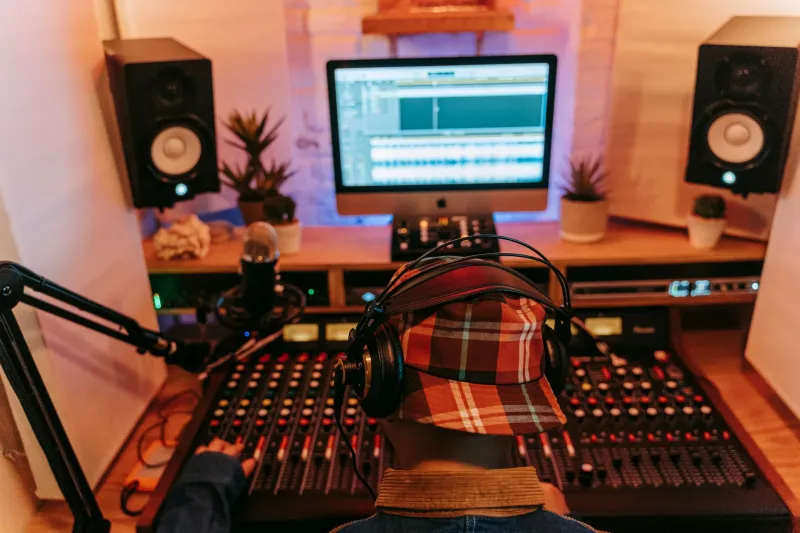
There's a record playing in your headphones right now. You know the artist's name, their face, their Instagram grid. What you probably don't know is who actually wrote the hook, who flipped the sample, who stayed in the studio until 4 a.m. sculpting every snare hit while the credited artist slept. On the West Coast, that story plays out thousands of times a year — and for a long time, the people living it were expected to smile, cash the check, and disappear.
That era is ending. Loudly.
The Hidden Economy Behind the Hits
Ghostwriting and uncredited production aren't new phenomena. They're practically load-bearing walls in the music industry's architecture. But the West Coast has always had its own particular flavor of this arrangement — a sprawling, interconnected network of producers, topline writers, and beatmakers operating just below the surface of a scene the rest of the world watches obsessively.
In LA's Leimert Park studios and Oakland's converted warehouses, the math has always been brutal: a ghostwriter might pocket a flat fee of a few thousand dollars for a verse that ends up on a platinum record. A producer hands over a beat, signs away publishing rights, and watches the streaming royalties flow into someone else's account. The credited artist gets the magazine covers. The actual architect of the sound gets a Venmo notification and a non-disclosure agreement.
"People talk about the music industry like it's this meritocracy," says one Inglewood-based producer who asked to remain anonymous — a request that itself says everything. "But the credit system has never been about merit. It's about leverage. And for a long time, the people doing the work had none."
Streaming Changed the Stakes
For decades, ghostwriting arrangements were uncomfortable but financially survivable. A flat fee on a physical record sale had a ceiling. Streaming blew that ceiling off and replaced it with infinite sky — which sounds great until you realize the royalty checks are going to the wrong person indefinitely.
A song that generates 500 million streams doesn't just pay out once. It keeps paying. For years. Potentially forever. When a producer or writer signs away their rights for a one-time payment, they're not just losing today's money — they're losing a revenue stream that compounds over time in ways that would have been almost impossible to project in the pre-streaming era.
This is the part of the conversation that's lighting a fire under West Coast creatives right now. It's not just about ego or artistic pride, though those matter too. It's about economics. It's about retirement. It's about the difference between building generational wealth and running on a treadmill of project-to-project survival.
"The streaming era made the theft visible," says a music attorney who works with independent artists throughout Southern California. "Before, you could maybe rationalize the arrangement. Now you can literally watch the numbers tick up on a dashboard and know exactly what you're not getting paid."
The Artists Breaking the Code
What's genuinely new — and genuinely exciting — is what's happening on the other side of the equation. A growing number of West Coast artists are publicly breaking with the tradition of burying their collaborators.
Some are doing it in liner notes, using streaming platform credits to list every contributor with specificity that would have been unusual even five years ago. Others are going further, shouting out their ghostwriters in interviews, tagging producers in release posts, and actively lobbying for proper split sheets before a single note gets recorded.
The motivation isn't purely altruistic. Artists who build reputations for treating collaborators fairly attract better collaborators. In a scene where relationships are currency, being known as someone who gives credit and pays on time is a competitive advantage. Word travels fast in a recording community where everyone seems to be three degrees from everyone else.
"I put every name on every record I release," says one Compton-based rapper who has built a devoted following through consistent, transparent crediting practices. "Not because I'm trying to be noble. Because those people made the record what it is, and the fans deserve to know the full picture. Also, honestly? It keeps the good producers coming back."
Producers Fighting Back Through Transparency
On the production side, a cohort of West Coast beatmakers is developing new strategies to protect themselves before the handshake even happens. Split sheets — legal documents establishing each contributor's ownership stake before a session ends — are becoming standard practice in circles that once operated entirely on trust and verbal agreements.
Some producers are going further, retaining publishing rights and licensing beats rather than selling them outright. Others are building their own public profiles — through social media, through producer tags embedded in tracks, through direct fan engagement — so that their contribution becomes impossible to scrub from the public record even if their name doesn't appear in the official credits.
There's also a growing community of producers who are simply refusing certain deals. Not every check is worth cashing. When the terms require silence and invisibility in perpetuity, some beatmakers are deciding the math doesn't add up — and walking away.
"I turned down a significant placement last year because the deal required me to waive all credits and any future royalty claims," says one producer based in the Bay Area. "A few years ago I probably would have taken it because I needed the money and the exposure. Now I know better. That song is going to live somewhere on the internet forever. My name should be on it."
What Transparency Actually Costs
It would be dishonest to pretend that the push for transparency is consequence-free. Some artists who have publicly credited ghostwriters have faced backlash from fans who felt deceived. The mythology of the solo genius — the artist who writes every word from pure personal experience — dies hard, especially in genres where authenticity is a core value.
But that mythology has always been exactly that. The history of American popular music is a history of collaboration dressed up as singular vision. The West Coast scene, for all its emphasis on realness, has never been exempt from that tradition.
What's shifting is the tolerance for the gap between the mythology and the reality. Younger audiences, raised on behind-the-scenes content and studio vlogs, are increasingly comfortable with — and curious about — the collaborative nature of record-making. Transparency is starting to feel less like a confession and more like a feature.
The Scene Is Watching
None of this gets resolved overnight. The financial structures, legal frameworks, and cultural norms that built the ghostwriting economy are deeply entrenched. Changing them requires sustained pressure from artists, producers, attorneys, and fans all pushing in the same direction simultaneously.
But something has shifted on the West Coast. The conversations that used to happen in hushed tones in parking lots after sessions are happening in public. The producers who used to disappear after the handoff are building platforms, telling their stories, and making it harder for the industry to keep pretending they don't exist.
The names in the shadows are stepping into the light. And the music — all of it, the credited and the uncredited, the visible and the invisible — is better for it.