Passport Not Required: How LA and Bay Area Artists Are Selling Out Stages From Berlin to Bangkok
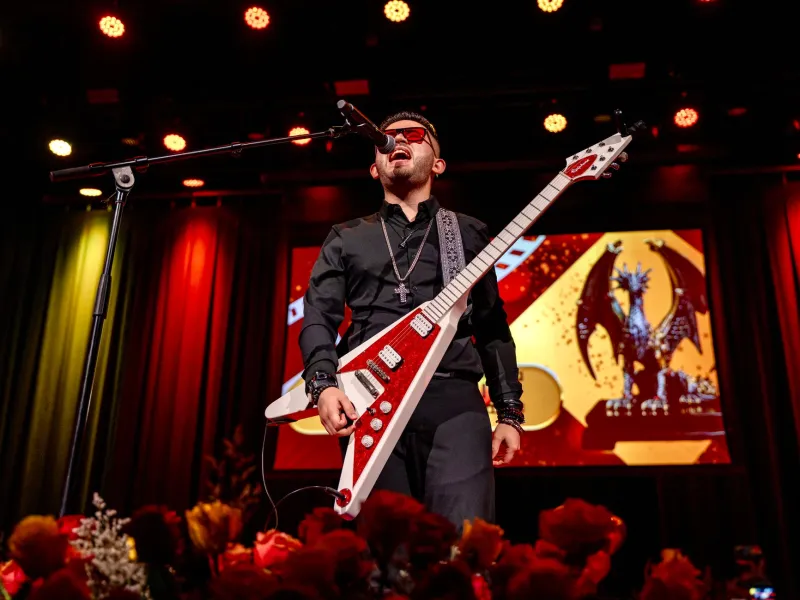
Last spring, a 26-year-old producer from Inglewood named Drez Caldwell played a 300-capacity venue in Amsterdam to a sold-out crowd. He had never been to Europe before. He did not have a booking agent with an international roster. He did not have a label fronting his travel costs. What he had was a SoundCloud page, a loyal Discord server with members in seventeen countries, and a rep built entirely on the strength of his music.
"I honestly thought it was a mistake when the promoter hit me up," Caldwell said. "Like, how do you even know who I am?"
The answer, it turns out, is the same story playing out for dozens of West Coast artists right now — a convergence of social media reach, tight-knit international music communities, and a global appetite for the kind of raw, authentic sound that LA and the Bay have been cooking up for decades. The West Coast is going global, and it is doing it entirely on its own terms.
The Demand Is Already There Before the Plane Lands
Ask any independent promoter in Europe or Southeast Asia what they are looking for right now, and a surprising number of them will mention the West Coast. Not just the legends — not just Kendrick or Too Short getting their flowers — but the up-and-comers, the mid-tier artists grinding out releases on Bandcamp and building audiences through TikTok and Instagram Reels.
Marcus Vael, a promoter based in Ghent, Belgium who books American acts for mid-size venues across Western Europe, says the shift started becoming obvious around 2021. "Before, you needed a publicist, you needed press in the UK, you needed some kind of European distribution deal to even get on my radar," he said. "Now I'm finding artists through Reddit threads and YouTube comment sections. The audience tells me who they want."
That audience-first pipeline is everything. When fans in Seoul or São Paulo are already streaming an Oakland rapper's latest project, already sharing his freestyles in group chats, already requesting his songs at local DJ nights, the promotional groundwork is done before a single booking email gets sent. The demand is baked in. The promoter is just fulfilling an order the internet already placed.
Why the West Coast Ethos Travels
There is something specific about the West Coast DIY spirit that seems to resonate internationally in a way that, say, major-label-polished pop does not. Artists from LA and the Bay have always operated with a certain self-sufficiency — pressing their own vinyl, building their own studios in garages, running their own labels out of bedrooms. That ethos is legible to independent music communities everywhere.
"In Japan, there is a deep respect for artists who control their own craft," said Yuki Tanaka, who runs a music blog and event series in Osaka focused on American underground sounds. "When we see a West Coast artist who produced their own album, mixed it themselves, released it themselves — that is a story we connect with. It feels honest."
Bay Area rapper and multi-instrumentalist Sola Vance, who has toured independently through Germany, Poland, and Mexico in the past two years, echoes that. "People overseas are not looking for a performance. They want to feel like they discovered something real. And the West Coast has always been real — like, structurally real. We don't have a choice but to be independent."
That authenticity is not just philosophical. It shows up in the music itself. The layered production styles coming out of LA's bedroom studios, the jazz-inflected rap from the Bay, the blending of genres that has always defined West Coast sound — these are qualities that international listeners with sophisticated tastes actively seek out.
The Infrastructure Making It Possible
None of this happens in a vacuum. Behind every sold-out overseas show is a small but growing infrastructure of international connectors — fan translators who subtitle artist interviews, diaspora communities who bring West Coast music into new cities, and a new breed of promoter who does their A&R work entirely through social media.
In cities like Mexico City, Berlin, and Manila, there are now regular DJ nights dedicated entirely to West Coast sounds. These are not nostalgia nights spinning 90s classics — they are forward-looking events that spotlight current independent artists. They function as a kind of soft launch for artists who have not yet set foot in those cities, building a live audience before any tour is even booked.
Social media platforms have become the touring circuit itself. An artist who posts consistently, engages with international fans, and drops location tags on their content is essentially running a low-cost global marketing campaign every single day. When Caldwell's Amsterdam promoter found him, it was through a viral Instagram reel that had been reshared by a Dutch music account with 80,000 followers. That one reshare led directly to a booking.
"You used to need a label to open those doors," said Vael. "Now the door opens itself if the music is right and the artist is active online."
The Money Math Is Changing Too
One of the biggest barriers to international touring has always been cost — flights, accommodation, backline, visas. For independent artists without label advances, those numbers can be prohibitive. But the economics are shifting in interesting ways.
Smaller venues abroad often offer better guarantees than comparable rooms in the US, partly because American independent artists are still something of a novelty in certain markets. Promoters in Eastern Europe and Southeast Asia, where the live music economy operates differently, sometimes cover full travel and accommodation as part of a booking deal — something almost unheard of for an independent artist at the same career level back home.
Sola Vance described her first European booking as genuinely shocking. "They paid for my flight, put me up in an Airbnb for five days, and the guarantee was more than I make headlining a 200-cap room in the Bay. I came home with money in my pocket and a whole new fan base."
Artists are also getting smarter about bundling. A single trip to Europe can now mean five or six bookings across multiple countries, organized through a loose network of promoters who share contacts and coordinate schedules. It is not a formal agency structure — it is a WhatsApp group and a shared spreadsheet — but it works.
What This Means for the Scene Back Home
The ripple effect of international traction is real. Artists who return from overseas tours come back with expanded audiences, stronger booking leverage, and a confidence that reshapes how they operate at home. They know their music works outside the bubble. That knowledge changes everything.
For the West Coast scene as a whole, this global moment is a validation of something local communities have known for years: the music coming out of LA and the Bay is genuinely world-class, and it does not need a corporate machine to prove it.
The world is already listening. The West Coast just has to keep showing up.