Roots, Reimagined: How Gen Z Is Reclaiming the West Coast Sound on Its Own Terms
Photo: YS MUsic, CC BY-SA 4.0, via Wikimedia Commons
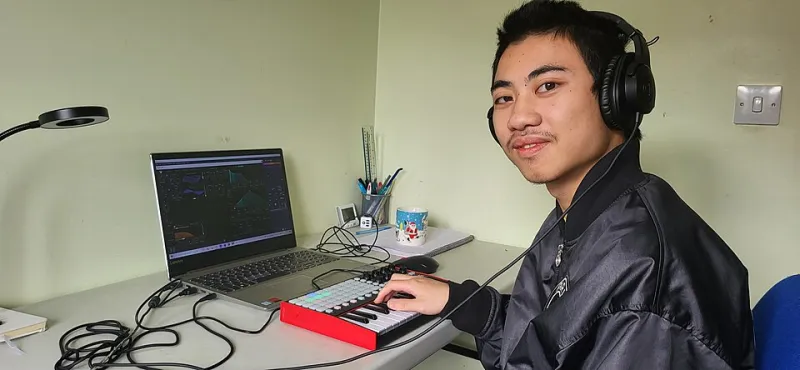
There's a moment in producer Dae Waverly's Oakland studio — tucked above a Vietnamese sandwich shop on Telegraph Avenue — where the past and the present collide in the best possible way. A sample of a dusty G-funk synth line loops through the monitors, but underneath it sits a 140 BPM drum pattern that could've been born on TikTok. It shouldn't work. Somehow, it absolutely does.
"I grew up hearing Dr. Dre on my uncle's speakers and Kendrick in the car," Waverly, 22, says, adjusting a worn Dodgers cap. "But I also grew up on SoundCloud and short-form video. I'm not trying to copy either world — I'm trying to figure out what I sound like when both of those things live in me."
That tension — honoring a legacy without being swallowed by it — is the defining creative challenge for a new wave of West Coast artists who are quietly, confidently rewriting the region's sonic story.
The Long Shadow of Trap Dominance
Let's be honest about what happened. Starting around 2015 and accelerating through the early 2020s, the cultural gravity of Atlanta-rooted trap music pulled the entire industry eastward. 808s became the universal language. Hi-hat rolls were currency. Even artists who grew up on the 10 Freeway were softening their regional edges to fit playlists that didn't care where you were from.
It wasn't just about sound, either. The aesthetics, the slang, the visual language — all of it tilted toward a template that had little to do with the Pacific Coast. West Coast artists who wanted streaming numbers learned to code-switch sonically, and a lot of them did it well. But something got lost in the translation.
"There was a period where I was making music that sounded like it could've come from anywhere," admits Soleil Ramos, a 20-year-old singer-songwriter out of Long Beach. "Like, geographically anonymous music. And it did okay. But it didn't feel like me."
Soleil's recent project, a self-released EP that samples classic West Coast soul and layers it over hazy, sun-bleached production, has racked up over 800,000 streams without a label push. The comments section reads like a homecoming.
What 'West Coast' Means to a 22-Year-Old
Here's where it gets interesting: the Gen Z version of West Coast identity isn't a carbon copy of what came before. These artists didn't just find the old blueprints and start building from the same foundation. They're renovating.
For San Diego-based producer collective Coastal Static, the West Coast sound is as much about Chicano funk and Tijuana cumbia as it is about G-funk. "People think West Coast music starts and ends with LA rap," says collective member Marisol "Mari" Fuentes, 24. "But we grew up on both sides of the border. That's West Coast too. That's always been West Coast."
The collective's productions blend lowrider-era oldies with corrido rhythms and trap-influenced percussion — a sound that feels genuinely regional in a way that transcends any single decade. Their monthly event series in Barrio Logan has become one of the more electric rooms in Southern California, drawing crowds that span generations.
Up in the Bay, the reclamation looks different but carries the same energy. Artists like 19-year-old rapper Theo Mack are reaching back to the hyphy era while pulling forward into hyperpop territory — a combination that sounds chaotic on paper but feels inevitable when you hear it. "Hyphy was always kind of chaotic and joyful at the same time," Theo says. "That's still the Bay. That's still us."
TikTok Gave Them the Map, But the Crates Gave Them the Destination
It would be easy to frame this as a backlash to the algorithm, but that's not quite right. Gen Z didn't reject TikTok — they used it to find their way back home.
Viral moments built audiences. Short-form content created entry points. But what those audiences discovered once they clicked through was something rooted in a specific geography, a specific history. The platform that supposedly homogenizes everything became, for these artists, a distribution mechanism for something deeply local.
"TikTok got people in my door," Waverly says. "But what's in my music — the samples, the vibe, the references — that's the West. Once people hear it, they want more of that. Not the version that sounds like everything else."
Soleil puts it even more simply: "The algorithm moves fast. Culture moves slower. I'm betting on culture."
The Elders Are Paying Attention
It hasn't gone unnoticed by the generation that built the original sound. Veteran producers and artists who lived through the golden era of West Coast music have been quietly watching — and in some cases, actively co-signing.
Session musicians who played on classic albums from the '90s are showing up in these younger artists' studios. Not to gatekeep, but to collaborate. To pass down context. To make sure the samples being flipped come with the full story attached.
"These kids know what they're doing," says one veteran session guitarist who asked to remain unnamed but has credits on some of the most iconic West Coast records ever pressed. "They're not just jacking the sound — they understand why it sounds the way it does. That's the difference."
A Scene That Feels Like Something
What's emerging isn't a single genre or a unified movement with a manifesto. It's more like a collective exhale — a generation deciding that geography still matters, that regional identity is a feature and not a bug, that making music that sounds like where you're from is an act of cultural confidence rather than creative limitation.
From the low-lit studios in Oakland to the backyard sessions in Compton to the warehouse shows in San Diego's arts district, the West Coast is sounding like itself again. Younger, weirder, more diverse in its influences — but unmistakably home.
Dae Waverly plays back the track one more time before we leave. The G-funk synth shimmers. The drums knock. Outside, Telegraph Avenue hums with its usual organized chaos.
"This is what the West sounds like now," he says, not defensively but with a quiet certainty that feels earned. "People are gonna catch up."
We have a feeling they already are.