Wide Awake and Getting Paid: How West Coast Creators Turned the Graveyard Shift Into a Gold Rush
Photo: Brianmcmillen, CC BY-SA 4.0, via Wikimedia Commons
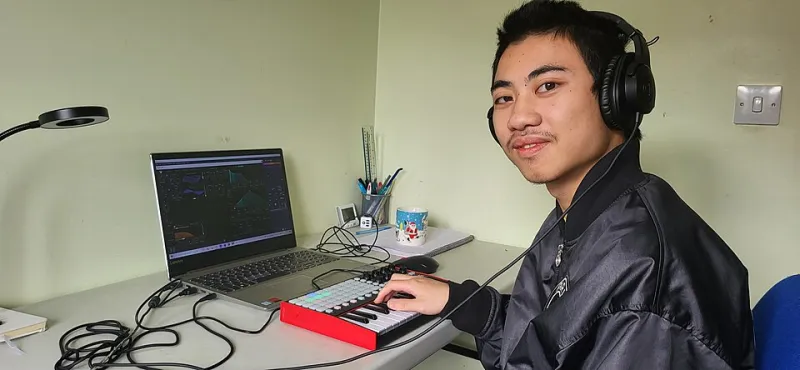
It's 2:47am in Los Angeles. Most of the city is horizontal, but somewhere in a Leimert Park apartment, a producer is finalizing a trap instrumental he'll sell to a label in Seoul before sunrise. By the time his neighbors are hitting snooze, he's already invoiced. By the time they're pouring coffee, he's asleep — and richer.
This is the 3am economy, and on the West Coast, it's thriving.
A quiet but significant shift is happening among independent artists, producers, and creators who've realized something counterintuitive: the hours between midnight and 6am are some of the most commercially potent of the entire day. The competition is thinner, the global audience is wide awake, and the dedicated fans who are online at that hour? They're committed. West Coast creators are leaning all the way in.
Time Zones Are a Feature, Not a Bug
The West Coast's geographic position has historically been framed as a disadvantage in entertainment — always three hours behind New York, perpetually scrambling to catch up with East Coast business hours. But a new generation of artists is flipping that script entirely.
When it's midnight in Los Angeles, it's 8am in London, 3pm in Dubai, and 4pm in Mumbai. That's a staggering slice of the global economy fully awake and scrolling. Producers who've figured this out are running what amounts to a second business day — one that starts when their American peers log off.
Beat-makers in the Bay Area and LA are increasingly ghost-producing for international clients: Korean hip-hop acts, UK drill artists, Afrobeats producers who need West Coast flavor baked into their records. The transactions happen over Discord and WhatsApp, the files move through cloud storage, and the money lands in PayPal or crypto wallets before the sun comes up on the Pacific. For a producer grinding in Inglewood or Oakland, a client in Amsterdam isn't a fantasy — it's a Tuesday.
The Midnight Drop Culture
If you've spent any time deep in music fan communities online, you already know that the most hyped drops rarely happen at noon. There's a reason artists schedule album releases at midnight — it's when the obsessives show up. West Coast creators have taken that logic and weaponized it.
Exclusive listening parties hosted on Discord at 1am Pacific have become a legitimate lane for independent artists building tight-knit fan bases. These aren't passive streams — they're interactive events where fans vote on tracklists, ask questions in real time, and sometimes pay a small entry fee for early access to unreleased music. The intimacy of that hour works in the artist's favor. People who are online at 1am on a Tuesday want to be there. The casual fans have long since tapped out.
Some artists are pairing these sessions with limited merchandise drops that only go live during the event — a hoodie or a signed vinyl that disappears by 3am. Scarcity plus exclusivity plus a community that feels genuinely special? That's a formula that moves product.
NFTs and the Early Morning Hustle
The NFT space may have cooled from its 2021 fever pitch, but for West Coast artists who know how to work it, the technology is still a real revenue tool — especially at weird hours. Creators who time their drops to the early morning window have found that the reduced noise cuts through. When the broader market is quiet, a well-timed 4am Pacific drop lands at 7am Eastern, prime scrolling time for the Northeast, and catches European collectors right at lunch.
Several LA-based visual artists and musicians have been quietly running this playbook for the past couple of years, dropping tokenized artwork, exclusive audio files, and behind-the-scenes content in the pre-dawn hours and watching the bids roll in by morning. The strategy requires discipline and consistency — you can't just stumble into a 3am drop and expect results — but those who've built an audience around it have a remarkably loyal collector base.
Sleep-Streamed and Somehow Profitable
Here's where it gets genuinely strange: some creators have found an audience not by staying awake themselves, but by streaming while they sleep. Lo-fi music channels running overnight on YouTube and Twitch have racked up billions of plays over the past several years, and West Coast producers are among the most prominent contributors to that ecosystem.
But the newer iteration goes further. Some artists are running overnight "ambient studio" streams — a camera pointed at a lit-up studio space, soft music playing, the occasional visual of a work-in-progress beat on a screen. It's meditative, it's aesthetic, and it accumulates watch hours while the creator is unconscious. Watch hours mean monetization thresholds. Monetization thresholds mean ad revenue. Ad revenue means rent money.
A few creators have taken this even further, building subscription tiers on Patreon that grant access to overnight "focus streams" where subscribers join a virtual co-working space soundtracked by the artist's unreleased music. It's productivity content, ambient music, community, and marketing all collapsed into one sleep-powered product.
The Dedicated Audience That Builds Differently
What ties all of this together is a specific kind of fan — someone who doesn't fit neatly into the daytime content consumption cycle. Night-shift workers, insomniacs, international listeners, people in different time zones who've discovered a West Coast artist and can't get enough. This audience is smaller than the algorithm-chasing mainstream crowd, but they engage differently. They buy. They show up. They tell people.
Artists who've tapped into this cohort talk about it like a revelation. The numbers might look modest on paper, but the conversion rates — the percentage of followers who actually spend money — are often dramatically higher than what they see from their daytime audience.
There's also something cultural happening here that feels distinctly West Coast. The region has always had a particular relationship with the night — from the lowrider culture of East LA to the underground rave scenes of the early 2000s to the house music that still pulses through San Francisco warehouses. Working after dark isn't a compromise for these creators. It's a tradition.
Staying Sharp When the City Sleeps
Of course, running a late-night creative business has its costs. Sleep debt is real, and burning out at 4am three nights a week isn't sustainable without intentionality. The creators who are doing this well tend to treat it like a shift — they schedule their graveyard hours deliberately, protect their rest on off nights, and build routines that keep the work quality high even when the rest of the world is dreaming.
The ones making it work aren't insomniacs stumbling through the dark. They're professionals who've identified a market inefficiency and built a system around it.
The 3am economy isn't for everyone. But for the West Coast artists who've claimed it, the graveyard shift is paying out like a jackpot — and they're not losing any sleep over it.