Home Is a Protest Song: West Coast Artists Are Scoring the Fight Against Displacement
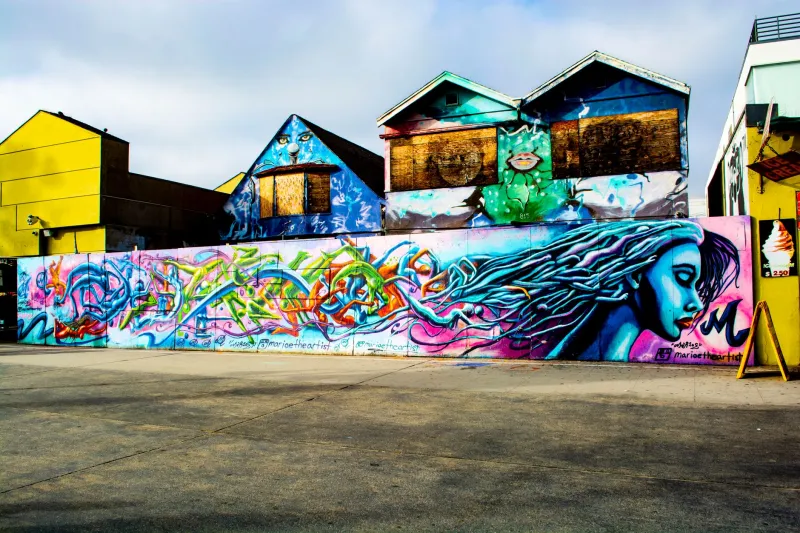
Somewhere in the Mission District, there's a mural that used to face a taqueria that's been there since 1987. The taqueria is gone now — replaced by a juice bar with a QR code menu. The mural is still there, for the moment, facing a building that's been sold twice in three years. In the apartment above what used to be a community record store on Crenshaw, a family that's lived in the same unit for two decades is weighing a buyout offer that's half what they'd need to stay in LA if they took it.
These are not abstract statistics. They are the actual texture of life in gentrifying West Coast cities right now. And the artists who grew up in these neighborhoods, who built their careers in these communities, who still live in whatever corners remain affordable — they are paying attention.
They are also making music about it. A lot of music.
The Soundtrack of Erasure
Gentrification has always had a soundtrack, even when nobody was deliberately composing one. The closing of a beloved venue. The silence where a record store used to be. The way a block sounds different when the people who gave it character have been priced out and replaced by people who don't know its history.
What's different now is that West Coast artists are consciously, deliberately, and sometimes furiously scoring that erasure — and using the music as both documentation and resistance.
South Central rapper and community organizer Dre Fontaine released a track last spring called "Block Obituary" that catalogs, verse by verse, every business, venue, and institution that's disappeared from his neighborhood in the past eight years. It's structured like a eulogy. It sounds like one too — mournful and slow until the third verse, where it breaks into something that feels closer to rage than grief.
"I wanted people to actually feel the weight of what's been lost," Fontaine says. "Not just read a list. Feel it. Music does that in a way that a neighborhood meeting or a city council comment never can."
The track has been played at three separate community organizing meetings, shared thousands of times on social media, and covered by a local NPR affiliate. It has not, to Fontaine's knowledge, changed a single zoning decision. But he doesn't think that's the only metric that matters.
Art as Archive
One of the most significant functions music is serving in this moment is archival. As neighborhoods transform faster than institutions can document them, artists are creating sonic records of what existed — and who — before the transformation.
Bay Area producer and sound artist Kezia Afolabi has spent the past two years recording what she calls "field documents" — compositions built around ambient recordings of specific blocks in Oakland's Fruitvale and West Oakland neighborhoods, layered with interviews, oral histories, and original music. The project, which she's releasing in installments on Bandcamp, is explicitly conceived as an archive.
"In twenty years, these recordings will be evidence," Afolabi says. "Evidence that this community existed, that it had a specific sound and a specific culture, and that it was taken from the people who built it. I want there to be a record that can't be demolished."
The project has attracted attention from academic institutions and documentary filmmakers, but Afolabi is deliberate about keeping it rooted in the community it documents. Every installment is pay-what-you-can, and a portion of proceeds goes directly to a local tenant advocacy organization.
Benefit Shows and the Question of Impact
Beyond recorded music, West Coast artists are increasingly using live performance as a fundraising and organizing tool — staging benefit concerts for housing advocacy groups, tenant legal defense funds, and anti-displacement coalitions.
In Los Angeles, a coalition of Boyle Heights-based musicians organized a two-day festival last fall that raised over $40,000 for a local legal aid organization that provides free representation to tenants facing eviction. The lineup was deliberately local and deliberately diverse — spanning cumbia, hip-hop, punk, and traditional Mexican folk music — reflecting the actual cultural makeup of the neighborhood.
"We wanted the event to look and sound like the community we were trying to protect," says one of the organizers, who asked to be identified only as Lucia. "Because part of what gentrification does is erase the culture before it erases the people. We wanted to make the culture undeniable."
The event sold out. It also generated a coalition of artists who have committed to ongoing organizing — monthly community events, political education sessions, and a shared fund for artists themselves who are facing displacement.
Can Music Actually Move the Needle?
This is the uncomfortable question that hangs over all of it. Music has always been part of social movements. It has documented injustice, built solidarity, and given movements an emotional vocabulary that policy arguments can't provide. But it has rarely, on its own, stopped a development project or reversed a rent increase.
The artists doing this work are clear-eyed about that tension.
"I don't think my songs are going to stop a luxury condo from going up," Dre Fontaine admits. "But I think they can change who shows up to fight it. They can make people feel like their anger is legitimate and shared. That's not nothing. That's actually a lot."
Kezia Afolabi frames it differently. "The music isn't the whole strategy. It's one part of a larger ecosystem — alongside legal advocacy, political organizing, direct action. Art has always played a specific role in movements: it sustains people emotionally for the long fight. That's what I'm trying to do."
What's undeniable is that the music is connecting. Tracks documenting displacement are finding audiences far beyond the neighborhoods that inspired them, generating conversations in cities across the country where the same forces are reshaping communities. The specificity of the West Coast experience — the particular grief of watching Leimert Park or the Fruitvale or the Central District transform — is landing as universal.
The Stakes Are Personal
For most of the artists doing this work, the subject isn't abstract. They are documenting communities they live in, or used to live in before they couldn't afford to anymore. The music is personal in a way that gives it a weight that more detached social commentary rarely achieves.
That personal stake is also what makes the work urgent. These aren't artists making protest music as a career move or a brand position. They're making it because the alternative — staying quiet while their neighborhoods disappear around them — isn't something they can do.
"This is my home," Fontaine says simply. "Or it was. Music is the only way I know how to say that and have anyone actually hear me."
On the West Coast right now, people are hearing it. Whether the people with the power to act on it are listening is another question entirely — and one that the music, for all its power, can't answer alone.