Small Stages, Loyal Crowds: Why West Coast Artists Are Trading Arenas for the Venue Hop
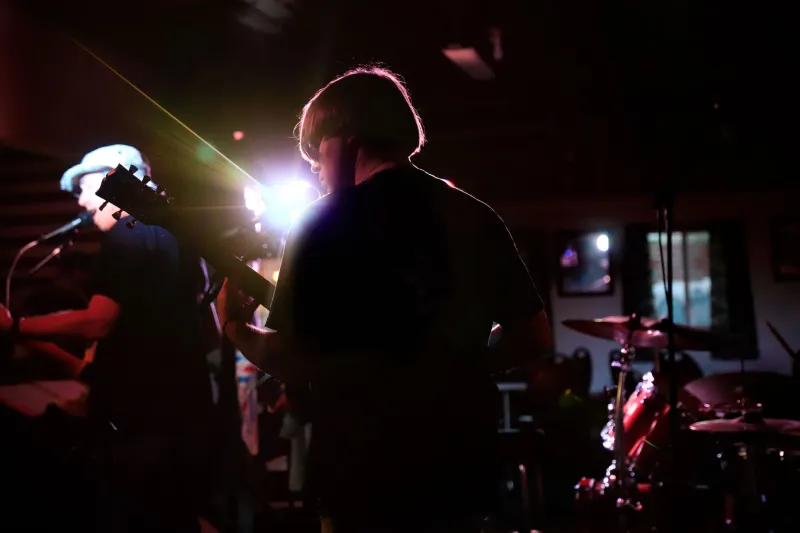
There's a certain kind of magic that happens when a performer is close enough that you can see the sweat on their brow. When the bass rattles the cheap beer in your cup. When the artist actually makes eye contact with you — not the crowd, you — and for a second it feels like the whole show is happening in your living room. That's not an arena experience. That's a 300-cap room in Silver Lake on a Tuesday night, and right now, it's exactly where some of the West Coast's most exciting emerging artists want to be.
The "venue hop" — a deliberately sequenced, multi-city tour built around smaller, carefully chosen rooms rather than scaled-up theaters or festival slots — is becoming the strategic move of choice for artists who are serious about longevity. And the numbers, along with the vibe, are starting to back it up.
The Strategy Behind the Small Room
For Oakland-based R&B artist Deja Monet, the decision to book a 12-stop tour through venues capping between 150 and 500 people wasn't born out of necessity. She had offers to open for bigger acts in larger rooms. She passed.
"I could've been a name on a poster that nobody came early enough to see," she says. "Or I could build my own thing from the ground up, in rooms where people actually came for me."
Her spring run — hitting spots in Oakland, Sacramento, Portland, Seattle, Boise, Salt Lake City, and back down through the California coast — sold out nine of twelve dates. More importantly, she noticed something that tour analytics don't always capture: repeat attendance. Fans from her San Francisco show drove down to catch the San Jose date two nights later. A small cluster of devotees hit four stops in a row.
"That doesn't happen when you're just another opener at the Shrine," she says. "That happens when people feel ownership over what you're building."
Promoters Are Paying Attention
Independent promoters across the West Coast have watched this shift with growing enthusiasm — and some admitted surprise at the revenue math.
Marcus Tilley, who books shows across the Pacific Northwest through his Seattle-based outfit Third Rail Presents, says the venue hop model is outperforming traditional scaling in ways that took him a minute to fully appreciate.
"Artists think bigger room equals more money, and that's not always true once you factor in production costs, guarantees, and the reality that a 2,000-cap room at 60 percent capacity feels dead," he explains. "A 400-cap room at 110 percent capacity — standing room, people pressed against the stage — that's electric. And the margin on a sold-out small room can absolutely compete with a half-filled mid-size venue."
Tilley has started actively pitching the venue hop framework to artists he works with, particularly those in the 5,000 to 50,000 monthly Spotify listener range — what he calls "the sweet spot for this strategy."
"You've got a real audience, but you haven't outgrown the intimacy yet. That window is precious. Use it right and you come out the other side with a cult following that will follow you into those bigger rooms when you're actually ready."
The Cult Following Formula
What separates a loyal fan from a casual listener? Proximity, access, and the feeling of being in on something before it blows up.
Los Angeles-based producer and live performer Theo Vega — who records under the name Vessel — has been running deliberate venue hop tours for two years now. His approach is almost surgical. He researches each city's independent music community before booking, targets rooms with strong regulars and engaged local followings, and structures the tour so that each stop feels like part of a connected narrative rather than a series of isolated shows.
"I drop location-specific content before each city. I shout out local artists in my set. I stay after every show and talk to people," he says. "By the time I come back six months later, those aren't just fans — they're advocates. They're bringing their friends. They're posting about it. They're the reason the second tour sells faster than the first."
Vega tracks his return-visit data obsessively. Across his last two tours, average ticket sales for the second visit to each city were up 34 percent over the first. In Portland, a city where he'd initially sold 180 tickets, he returned to find 400 people in line for a 350-cap room.
What Gets Left Behind
The venue hop isn't without its trade-offs, and artists who've embraced it are honest about that.
Driving or busing between cities for twelve stops is grueling in a way that a single big-market arena run isn't. The per-night revenue ceiling is lower. There's no single "moment" — no sold-out Staples Center photo that goes viral and signals arrival to the industry.
"The optics of it can feel slow," admits Deja Monet. "People in the industry look at you and ask why you're not scaling up. But I'm building something real. I'd rather have 2,000 people who would follow me anywhere than 20,000 who streamed one song and forgot my name."
Marcus Tilley echoes the sentiment from the business side. "The industry still measures success in peak moments. But sustainable careers aren't built on peaks — they're built on foundations. The venue hop is foundation work."
The West Coast Advantage
There's something particularly well-suited about the West Coast geography for this model. The I-5 corridor alone — San Diego up through LA, the Central Valley, the Bay Area, Sacramento, Portland, Seattle — offers a dense string of cities with distinct, passionate music communities that are close enough to tour efficiently but different enough that each stop feels culturally fresh.
Add in college towns like Eugene, Chico, and Santa Barbara, plus the growing scenes in secondary markets like Fresno and Spokane, and a West Coast-focused venue hop tour can hit 15 cities without ever leaving the region — or the timezone.
"The infrastructure is here," says Theo Vega. "Great independent venues, engaged local media, strong music communities. You don't have to go to New York to prove yourself. You can build something massive right here and let the rest of the country come to you."
The Long Game
Ask any of these artists where they see themselves in five years, and the arena dream isn't gone — it's just resequenced.
The venue hop isn't a rejection of scale. It's a different path to it. One built on trust, community, and the kind of word-of-mouth momentum that no marketing budget can manufacture. When these artists do eventually step into larger rooms, they'll bring with them crowds who've been riding since the 300-cap days — people who feel like they built something alongside the artist, not just watched from a distance.
That kind of loyalty? You can't buy it. But you can earn it, one intimate stage at a time.