Sunlit and Booming: How West Coast Clubs Are Reinventing Themselves Before the Lights Go Down
Long after the last DJ packs up and the velvet rope goes slack, a new kind of energy is filling West Coast nightclubs. From Oakland warehouse spaces to Silver Lake dance floors, venues are throwing open their doors in the daylight hours — and what's walking in isn't just foot traffic. It's a full-blown creative revolution.
The math used to be simple: clubs made money at night, sat empty by day, and paid rent regardless. But a growing number of West Coast venue owners have decided that a 5,000-square-foot room with professional acoustics, moody lighting rigs, and a bar nobody's using at 11 a.m. is basically a goldmine hiding in plain sight. They're flipping the script — and the results are reshaping what a "music venue" even means in 2025.
From Dance Floor to Drawing Board
Take what's been happening in the Arts District in LA. A handful of clubs that typically don't see their first customer until 10 p.m. have quietly begun hosting producer workshops, beat-making sessions, and live recording hang-outs on weekday afternoons. The vibe is completely different — fluorescent overheads swapped for natural light bleeding through propped-open loading dock doors, folding tables where bottle service stations usually stand — but the creative output? Loud.
"We realized we were sitting on one of the best acoustically treated rooms in the neighborhood and doing nothing with it for eighteen hours a day," says Marcus Delray, co-owner of a mid-capacity venue in the Arts District who asked us not to name the club specifically while lease negotiations are ongoing. "Once we started opening the space up for sessions and workshops, artists started treating it like a second home. That energy bleeds into the night shows too."
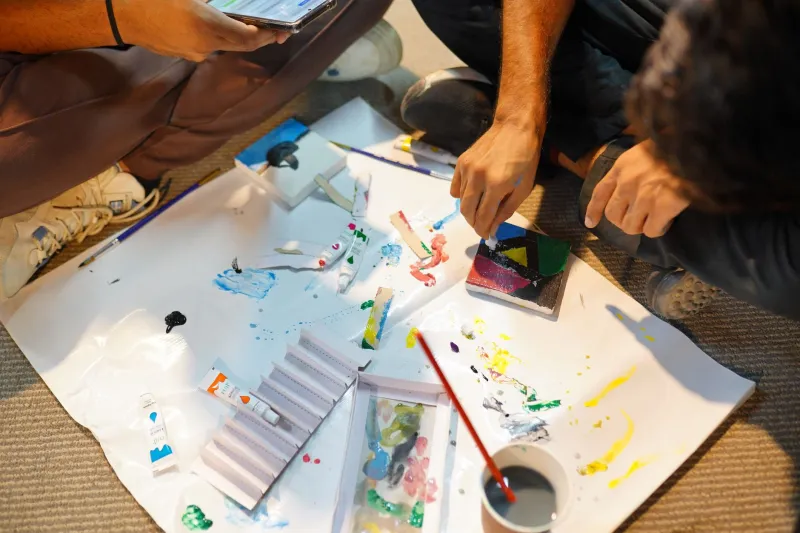
It's not just LA. Up in Oakland, venues that built their reputations on late-night electronic and hip-hop bookings have been piloting daytime pop-up galleries, zine fairs, and collaborative residencies that pair visual artists with producers. The Bay's long-standing tradition of merging art forms makes it a natural testing ground for this kind of hybrid model, and venue owners there say the community response has been overwhelming.
The Economics Actually Make Sense
Here's the thing nobody wants to admit out loud: running a nightclub in a major West Coast city is increasingly brutal. Rents have skyrocketed, insurance costs are punishing, and post-pandemic foot traffic still hasn't fully bounced back in some markets. Diversifying into daytime programming isn't just a creative flex — it's a survival strategy.
Workshop ticket sales, hourly studio rentals, and gallery entrance fees might seem modest compared to a sold-out Saturday night, but they add up. More importantly, they spread risk. A slow weekend doesn't sting as badly when Tuesday afternoon's producer session brought in forty paying participants and a brand partnership from a local gear company looking to demo equipment.
Some venues have gotten even more strategic about it. A club in San Diego's North Park neighborhood recently launched a monthly "Daytime Collective" series — part open studio, part marketplace, part networking event — that has attracted local clothing designers, photographers, and musicians under one roof. Entry is ticketed, vendors pay a small table fee, and the venue's bar does a brisk afternoon business on what used to be a completely dead day.
"People think we're being altruistic," laughs the venue's events coordinator, who goes by Sola. "We love the community energy, absolutely. But we're also paying bills. The two things aren't mutually exclusive."
Where Musicians and Visual Artists Finally Share a Room
Perhaps the most exciting byproduct of this trend is the cross-pollination happening between creative communities that don't always run in the same circles. Producers are meeting painters. Photographers are collaborating with beatmakers. Graphic designers are scoring live sets.
In Portland, a venue on the east side has been hosting what they call "Build Days" — unstructured Saturday afternoon sessions where anyone with a creative project can show up, claim a corner of the room, and work. The only rules are that you have to be making something and you have to be open to talking about it. Local musicians have used these sessions to workshop unreleased tracks in front of small audiences and get real-time feedback. Visual artists have designed album artwork on the spot. A few genuine collaborative projects have been born out of conversations that started over somebody's laptop and a can of sparkling water.
"The nightlife scene can feel siloed," says Portland-based producer and frequent Build Day attendee Nadia Reese. "You've got the music people, the art people, the fashion people — everyone kind of stays in their lane at night because it's loud and social. During the day in that same space, it gets quiet enough to actually connect."
The Venue as Community Anchor
There's something bigger happening here too, something that goes beyond revenue streams and creative output. West Coast venues have always been more than places to dance — they've been cultural anchors, gathering spots where identity gets formed and scenes get built. The daytime pivot is an extension of that role, not a departure from it.
In a moment when housing costs are pushing artists out of major metro areas and community spaces are disappearing to luxury development, a club that opens its doors in the afternoon becomes something genuinely valuable: an affordable, accessible place to create. Several venues have made a point of keeping their daytime programming free or cheap specifically because they understand the stakes.
"If we only exist for people who can afford a $25 cover and a $15 drink, we're not actually serving the culture we came from," says Delray. "The daytime stuff lets us be useful to people in a different way."
What's Next
The venues leaning hardest into this model are already thinking about what comes next — dedicated studio infrastructure, artist-in-residence programs, partnerships with local colleges and music schools. A few are exploring the idea of a "venue membership" that gives artists access to the space during off-hours in exchange for a monthly fee, essentially turning the club into a creative co-working space with a really good sound system.
None of this replaces the night. The lights will still go down, the bass will still drop, and the West Coast will still bring the energy it's always brought after dark. But somewhere between sunrise and showtime, something new is taking shape on these dance floors — and it might just be the most exciting thing happening in the scene right now.