Last Call for the Live Room: West Coast Venues Are Getting Priced Out — and Fighting Back

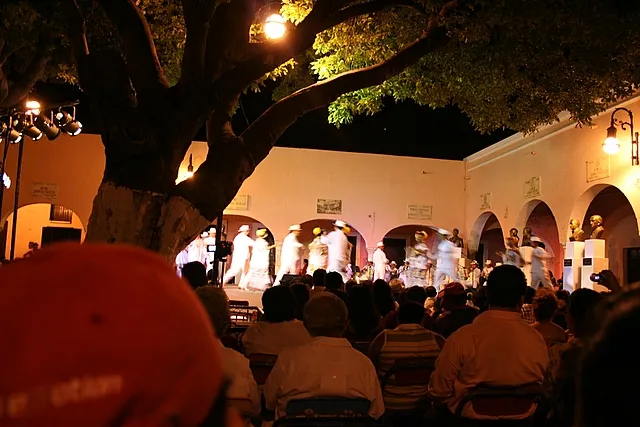
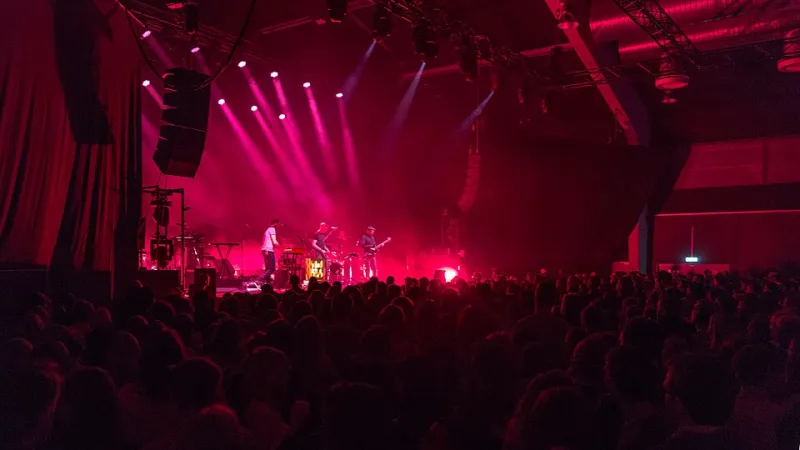
Photo: small music venue concert crowd West Coast city neighborhood, via wallpaperaccess.com
There's a particular kind of grief that hits when a music venue closes. It's not like losing a restaurant or a boutique. It's more personal than that — the loss of a room where something real happened, where a song hit different because you were standing twenty feet from the person singing it. On the West Coast, that grief is becoming disturbingly familiar.
From Seattle's Central District to the Silver Lake corridor in Los Angeles, from the Mission District in San Francisco to the arts pockets of Portland, venues that have anchored local music scenes for years — sometimes decades — are shutting their doors. The culprit, almost universally, is the same: real estate.
Rents are climbing at a pace that most small and mid-sized venues simply cannot absorb. Neighborhoods that once offered affordable commercial space because nobody else wanted them are now hot commodities, transformed by waves of development and displacement into something unrecognizable to the artists and audiences who made them worth moving to in the first place.
The Numbers Don't Lie
The economics of running a live music venue have never been easy. Margins are thin, hours are brutal, and success is highly dependent on variables no one can control — weather, competing events, the whims of a city's nightlife appetite on any given weekend. But the current environment has introduced a pressure point that threatens to break even the most resilient operations.
In Los Angeles, commercial rents in neighborhoods like Echo Park, Highland Park, and Boyle Heights have increased dramatically over the past several years as residential gentrification pulls commercial real estate prices upward behind it. In San Francisco, the situation is even more acute — the city has lost a staggering percentage of its live music venues since the first tech boom, and the second wave has accelerated the trend.
"We used to have a lease that made sense," says Carla Medina, who co-owns a 200-capacity venue in the Eastside of Los Angeles that she asked us not to name specifically. "When it came up for renewal, our landlord tripled the ask. Not doubled. Tripled. We're not a chain. We don't have investors. We're two people who love music and have been doing this for eleven years."
Medina and her partner are currently operating month-to-month while they figure out their next move. "Every show we book right now feels like it might be the last one," she says. "That's not a way to run a business. That's not a way to live."
What Disappears With the Stage
It would be easy to frame this as a story about real estate, and it is — but it's also a story about what live venues actually do for a community, and what disappears when they close.
Small and mid-sized venues are where most artists play before they play anywhere that matters. They're where local scenes develop their identity, where genres cross-pollinate, where a Tuesday night show with fifty people in the room can change the trajectory of a career. They're also, crucially, where communities gather around shared culture — and on the West Coast, where so many cities are defined by the diversity of their populations, those gathering spaces carry enormous social weight.
"When a venue closes in a neighborhood, it's not just the music that leaves," says promoter and event organizer Darius Webb, who has been producing shows in the Bay Area for nearly fifteen years. "It's the community infrastructure. The place where people from different backgrounds actually shared space. That's hard to replace, and it doesn't just come back because the rent eventually goes down."
Webb has watched several venues he helped build audiences for shutter in the last three years. He's also watched the neighborhoods around them change in ways that make it harder to imagine new ones opening.
Getting Creative, Getting Loud
But here's the thing about West Coast music culture: it has never waited for permission. The same DIY energy that built the scene in the first place is now being redirected into survival strategies that are genuinely innovative — and in some cases, genuinely inspiring.
Pop-up shows have exploded as a workaround to the fixed-venue model. Artists and promoters are activating warehouses, parking structures, rooftops, community gardens, and retail spaces for one-night events that generate revenue without requiring a long-term lease. The logistics are harder, the permits are a headache, and the setup costs are real — but the flexibility is invaluable in a market where a traditional venue model is increasingly untenable.
Some venue operators are pursuing community ownership models, essentially turning their spaces into cooperatives where regular patrons, artists, and local stakeholders buy in and share governance. It's a model borrowed from food co-ops and community land trusts, and while it's not a perfect solution, it introduces a layer of community accountability that makes displacement harder.
Others are building explicit partnerships with local government and cultural organizations. In Seattle, advocacy groups have pushed successfully for zoning protections that classify music venues as cultural assets, giving them a degree of protection that purely commercial spaces don't receive. Los Angeles has seen similar conversations gain traction, though the policy progress has been slower.
"The city talks about culture all the time," says Webb. "Culture this, culture that. But when it comes to protecting the actual physical spaces where culture lives? That's where the conversation gets quiet. We're trying to make it loud again."
The Scene Isn't Done Yet
It would be dishonest to end this without acknowledging how serious the situation is. Venues are closing. Artists are losing stages. Neighborhoods are changing in ways that won't simply reverse themselves. The music scenes that define West Coast cities — that make them worth living in, worth visiting, worth caring about — are under genuine threat.
But the West Coast has always been a place that makes something out of nothing. The people fighting to keep these rooms alive are doing it with the same scrappy, collaborative, unapologetically creative energy that built the scenes in the first place. They're not waiting for a savior. They're throwing the show themselves.
And as long as someone's willing to open a door and turn on a PA, the scene stays live.